

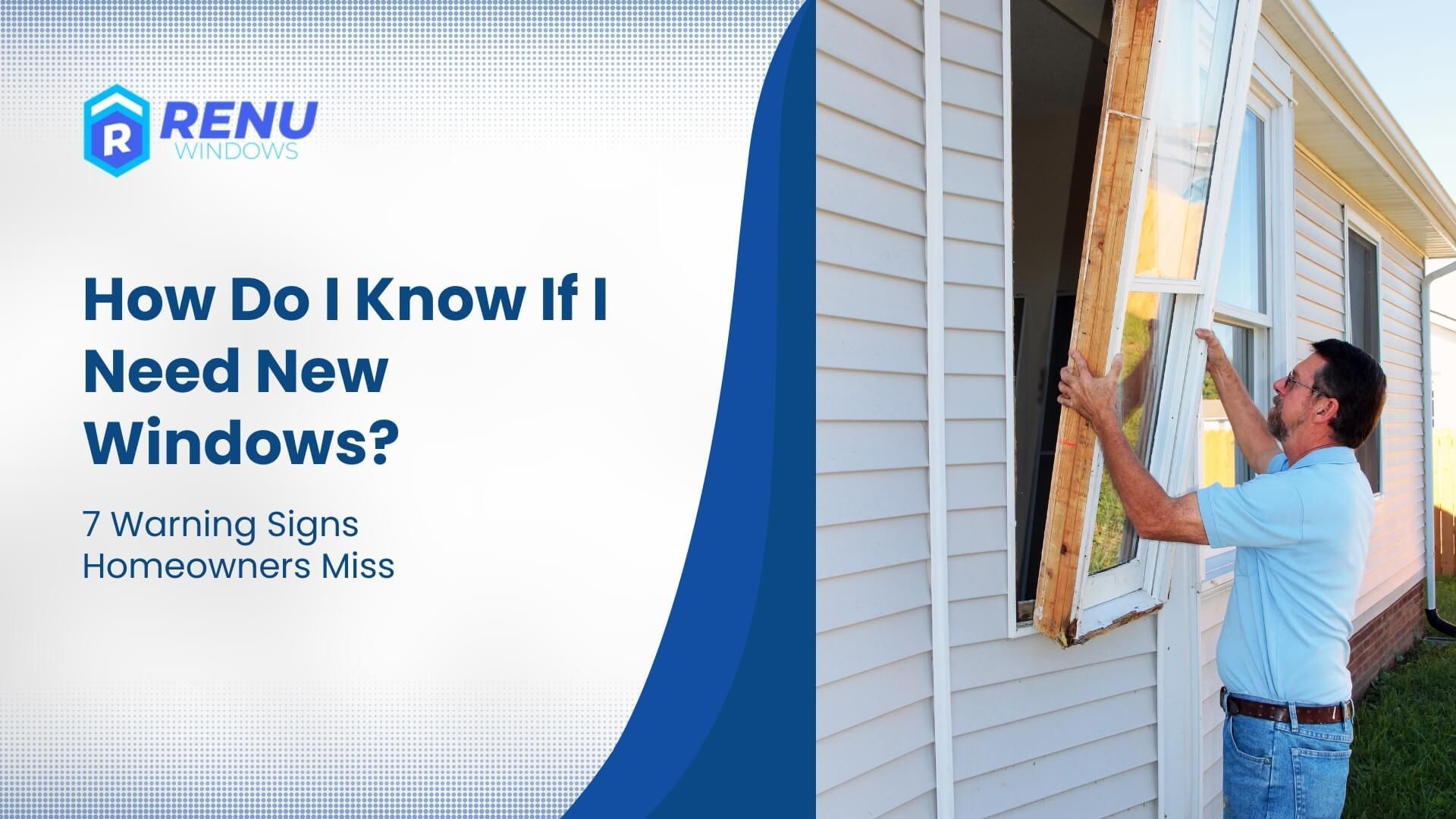
How Do I Know If I Need New Windows? 7 Warning Signs Homeowners Miss
Windows don't usually fail all at once. They deteriorate slowly, a small draft here, a slightly harder-to-open sash there, a haze that builds up between the panes over a few months. By the time most homeowners notice something is wrong, the windows have been underperforming for years. Knowing the signs you need new windows keeps that slow decline from turning into a significant comfort and energy problem.
QUICK ANSWER
The most reliable signs that you need new windows include drafts near closed windows, condensation or fogging between glass panes, visible frame damage like rot or warping, difficulty opening or closing sashes, noticeably higher heating or cooling bills, excessive outside noise, and single-pane glass. Any one of these on its own warrants a professional evaluation.
KEY TAKEAWAYS
Drafts near closed windows signal failed weatherstripping or sash gaps, common in windows over 15 years old.
Condensation between panes means the insulating seal has permanently failed; there is no repair for this condition.
Foggy window glass causes energy loss even when the window looks intact from the outside.
Old windows' energy loss signs often show up first on your utility bill, not in visible window damage.
Windows that are difficult to open or close are a safety concern, not just a convenience issue.
RENU Windows offers free in-home evaluations for homeowners in Northwest Arkansas to assess which windows need replacement and which can wait.
Most replacement windows today carry significant warranty coverage; waiting rarely saves money if your windows are past their useful life.
Signs You Need New Windows: The 7 You Might Be Overlooking
Some warning signs are obvious. Others are so gradual that homeowners adapt to them without realizing what's happening. Here are the seven signs that point most clearly toward replacement.
1. Drafts Around Closed Windows
Hold your hand near the edge of a closed window on a cold or windy day. If you feel air movement, the window is no longer sealing properly. This could be failed weatherstripping, a warped sash, or a frame that has shifted over time. Light weatherstripping repairs can help temporarily, but if the frame itself has moved or the window components no longer align, replacement is the only lasting fix.
Drafty windows are one of the leading causes of comfort problems in Arkansas homes, particularly during the winter months. A room that never quite warms up, or one that feels cold near the exterior walls, often traces back to window performance rather than HVAC capacity.
2. Condensation or Fogging Between the Glass Panes
This is the sign that gets dismissed most often. Homeowners see a cloudy, foggy appearance between the glass layers and assume it will clear up. It won't. Foggy window glass occurs when the hermetic seal between the panes breaks down, allowing moisture to enter the space between the glass. Once that happens, the insulating gas has escaped, the moisture is trapped, and the window's thermal performance is permanently degraded.
There is no practical repair for a failed window seal. Defogging services exist, but they don't restore the insulating properties of the window. The window continues to underperform regardless of how clear the glass appears after treatment.
3. Difficulty Opening, Closing, or Locking
Windows that require significant effort to open, stick in hot weather, or won't lock properly are past their service life. Painted shut windows in older homes are a specific version of this problem. Beyond being frustrating, windows that won't fully open or lock represent a security and safety issue; they compromise emergency egress and make forced entry easier.
Wood frame windows are especially prone to this. They swell in humidity, contract in cold, and over time, the sashes bind so badly that they're functionally sealed shut. Vinyl and fiberglass replacement windows don't behave this way.
4. Visible Damage to the Frame or Sash
Soft spots, discoloration, peeling paint, or visible rot on window frames are not cosmetic issues. They indicate moisture infiltration that has compromised the structural integrity of the frame. A damaged frame cannot hold a proper seal, and it allows water to migrate toward wall framing and insulation, leading to much more expensive repairs if left unaddressed.
Run your hand along the wood frame windows on the interior sill. If the wood feels soft or spongy in any area, that window needs replacement, not refinishing.
5. Noticeably Higher Energy Bills
Old windows' energy loss signs are often financial before they're physical. If your heating and cooling bills have increased without a change in your habits or HVAC equipment, your windows may be transferring heat at a rate far higher than modern replacements would. Single-pane windows have an R-value of roughly 1, compared to R-3 to R-5 for modern double-pane units. That difference is substantial when you're running your air conditioning for five months of the year in Northwest Arkansas.
Window condensation between panes is one indicator, but you don't need visible damage to have significant energy loss. Older double-pane windows can lose their insulating gas fill over time, dropping their performance close to single-pane levels without any obvious visible change.
6. Excessive Outside Noise
Modern replacement windows provide meaningful sound attenuation. If street noise, neighbor activity, or outside sounds feel uncomfortably close inside your home, your windows are likely older single-pane units or aging double-pane windows with degraded seals. Homeowners who replace windows for energy reasons are consistently surprised by the noise reduction benefit; it often becomes the feature they appreciate most.
7. Single-Pane Glass
If your home still has single-pane windows, common in homes built before 1990, replacement is not a question of if, but when. Single-pane glass provides almost no insulation value, conducts cold and heat directly from outside to inside, and cannot meet current energy standards. In Arkansas's climate, single-pane windows add meaningfully to cooling and heating costs every month they remain in service.
What Happens When You Ignore These Signs
Delayed window replacement doesn't just mean continued discomfort and higher bills. Over time, failing windows create additional problems.
Water Damage to Surrounding Structure
Windows that are failing at the frame often allow moisture infiltration that the homeowner never sees until it becomes visible mold, rotted framing, or damaged drywall. By that point, the repair scope extends well beyond window replacement into structural work that costs significantly more.
Common Mistakes Homeowners Make When Windows Start Failing
The most common mistake is re-caulking aging windows and treating it as a solution. Exterior caulk can seal minor gaps, but it does nothing for failed internal seals, warped frames, or windows that no longer align properly. Another frequent error is replacing only the worst-looking windows while ignoring others that are performing almost as poorly. A replacement project done in phases often ends up costing more per window than replacing all units in one project.
When to Replace vs. When to Wait
Windows under 15 years old with minor weatherstripping issues and no seal failure may benefit from targeted repairs. Windows over 20 years old, any window with condensation between the panes, any window with frame damage, and any remaining single-pane units in the home should be on the replacement list, regardless of other factors. If you're asking how do I know if I need replacement windows, the presence of any two signs from this list is a strong indicator that evaluation by a professional is the right next step.
Decision-Making Guide: When the Numbers Make Sense
What Window Replacement Costs Compared to Ongoing Repair
A homeowner spending $200 per year maintaining older windows, caulking, weatherstripping, and painting, reaches $3,000 in 15 years with no improvement in energy performance. A replacement project that costs $6,000 for a 12-window home, spread over a 30-year window life, works out to $200 per year with dramatically better performance, no maintenance, and warranty coverage on the product.
Energy Savings That Offset the Investment
Homes in Fayetteville, Rogers, and Bentonville with aging windows and high summer cooling bills often see $25 to $60 per month in utility savings after replacement. That's $300 to $720 per year back into your pocket. Depending on your current windows and your energy usage, the payback window on replacement ranges from eight to fourteen years, well within the expected service life of the new windows.
What Homeowners Should Consider Before Deciding
How long you plan to stay in the home matters. If you're selling within two years, replacement still makes financial sense because of the resale value impact and reduced buyer objections. If you're planning to stay long-term, the combination of energy savings, comfort improvement, and elimination of maintenance costs makes the decision straightforward. The question is rarely whether to replace, it's which windows to prioritize and when to schedule the project.
AT A GLANCE: WINDOW CONDITION CHECKLIST
| Warning Sign | Severity | Repair or Replace? |
|---|---|---|
| Drafts near closed windows | Moderate to High | Depends on the frame condition |
| Condensation between panes | High | Replace: No effective repair |
| Difficulty opening/locking | Moderate to High | Replace if structural |
| Visible frame rot or damage | High | Replace immediately |
| Rising energy bills | Moderate | Evaluate window age and type |
| Excessive outside noise | Moderate | Replace for meaningful improvement |
| Single-pane glass | High | Replace: No insulation value |
Frequently Asked Questions
What are the most obvious signs that windows need to be replaced?
The clearest signs are condensation or fogging between the glass panes, visible rot or damage to the frame, and drafts around windows that are fully closed. These indicate conditions that cannot be corrected with maintenance. When you see any combination of these signs, especially in windows more than 15 to 20 years old, a professional evaluation for replacement is the right next step.
Can foggy or condensation-filled windows be repaired instead of replaced?
No. Not effectively. Fogging between panes happens when the hermetic seal fails, and moisture enters the insulating space. Defogging services can temporarily improve appearance, but do not restore the window's insulating value or reseal the glass unit. The window will continue losing energy at a degraded rate. Replacement is the only solution that restores performance.
How long do replacement windows typically last?
Quality vinyl replacement windows typically last 25 to 40 years with minimal maintenance. Fiberglass frames can last longer. The limiting factors are usually the insulating glass unit, the seal between panes, and the hardware. Most reputable manufacturers warrant the glass against seal failure for 20 years or more. Companies like RENU Windows back their products with a lifetime warranty, including lifetime glass breakage coverage.
Do drafty windows always mean they need to be replaced?
Not always. If the window is relatively new and the weatherstripping has simply worn out, replacing the weatherstripping can restore the seal. However, if the frame has warped, the sash no longer aligns properly, or the window is more than 20 years old, the draft is usually a symptom of a larger structural problem. In those cases, repair is a temporary fix and replacement is the permanent solution.
How do old windows affect my energy bills in Arkansas?
Significantly. Single-pane windows and older double-pane units with degraded seals transfer heat at a much higher rate than modern replacement windows. In Arkansas, where summer temperatures regularly exceed 90 degrees, that heat transfer forces your HVAC system to work harder and run longer. Homeowners who replace old windows with energy loss signs often see meaningful reductions in cooling costs within the first summer after installation.
What is the most accurate way to know if I need replacement windows?
The most accurate method is a professional in-home evaluation. A qualified window specialist will assess each window's seal integrity, frame condition, weatherstripping, hardware, and glass type, and give you a clear recommendation on which windows need replacement now versus which can reasonably wait. RENU Windows provides free evaluations for homeowners across Northwest Arkansas with no obligation.
Ready for New Windows That Last?
Your windows affect more than appearance. They impact comfort, energy efficiency, utility costs, and long-term home value. RENU Windows helps homeowners across Northwest Arkansas replace outdated windows with custom-built solutions backed by a lifetime warranty, lifetime labor coverage, and lifetime glass breakage protection.
Schedule Your Free Consultation
Get expert guidance, honest recommendations, and a window replacement experience designed around your home and your goals.
